
PGT-A Genetic Testing in IVF
Preimplantation Genetic Testing for Aneuploidy
PGT-A is an advanced genetic test used in IVF to identify embryos with the correct number of chromosomes before transfer. By selecting genetically normal embryos, doctors can improve implantation rates and reduce the risk of miscarriage.
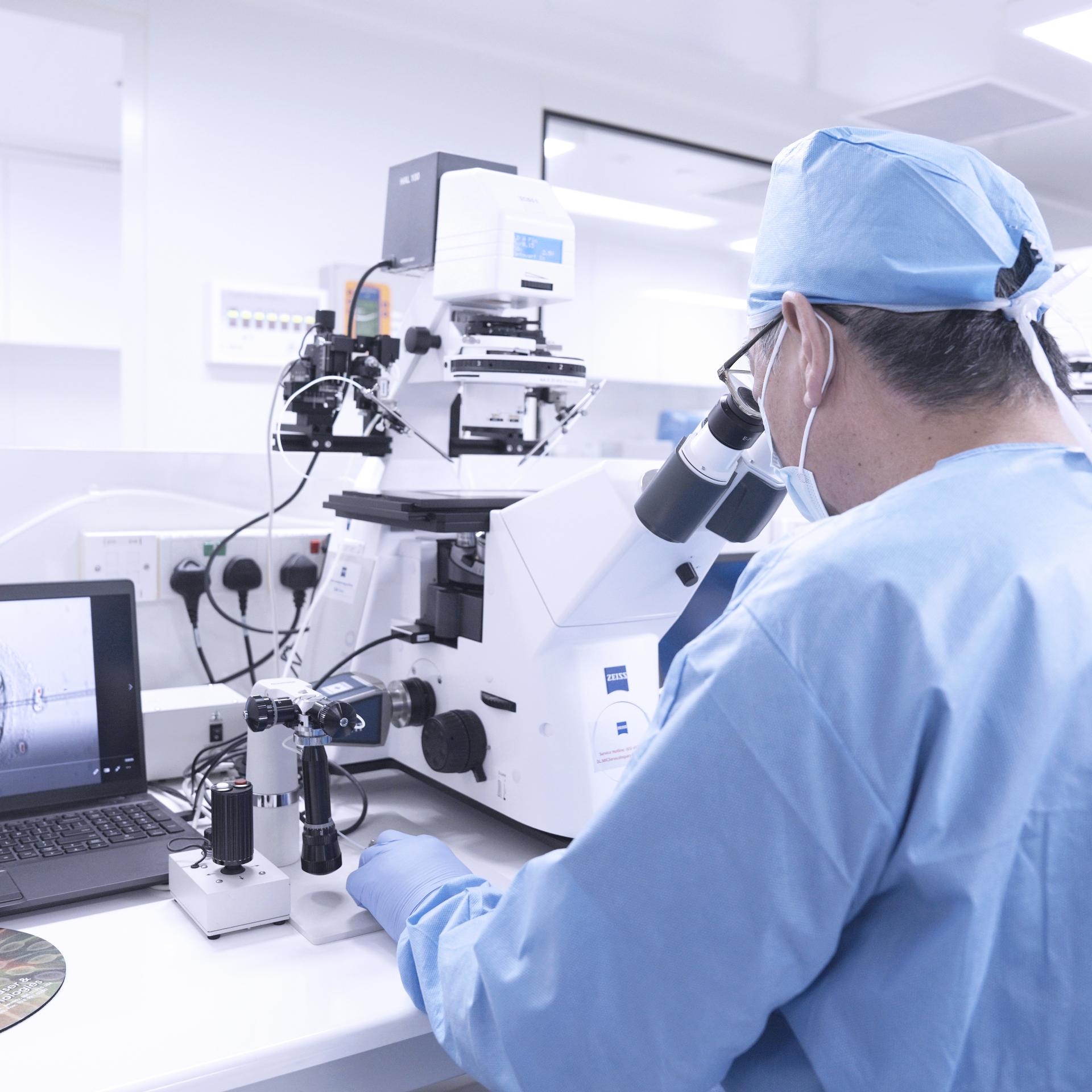
What is PGT-A Genetic Testing?
PGT-A stands for Preimplantation Genetic Testing for Aneuploidy. It is a laboratory test performed during IVF treatment to examine the chromosomes of embryos before they are transferred into the uterus. Chromosomes carry genetic information that guides normal embryo development. Human embryos should normally contain 46 chromosomes. If an embryo has too many or too few chromosomes, it is called aneuploidy. These abnormalities can lead to:
Possible Outcomes of Aneuploidy
- Failed implantation
- Early miscarriage
- Genetic disorders
- Abnormal embryo development
How PGT-A Testing Works
Step 1: IVF Embryo Development
Eggs are fertilized in the IVF laboratory and allowed to develop into blastocysts (typically day 5 embryos).
Step 2: Embryo Biopsy
A few cells are carefully removed from the outer layer of the embryo without harming its development.
Step 3: Genetic Analysis
Advanced genetic sequencing analyzes the chromosomes to determine if the embryo is genetically normal.
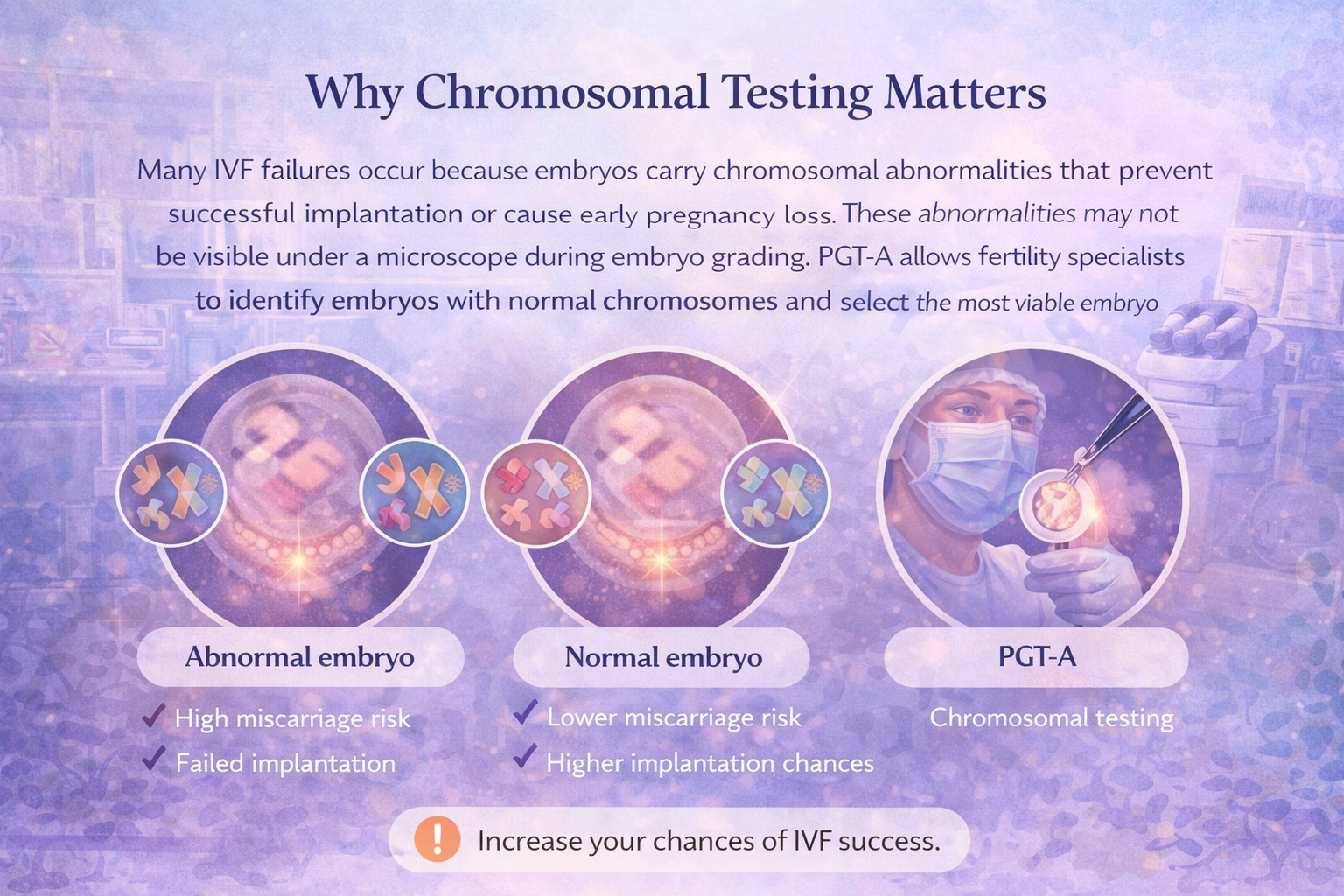
Why Chromosomal Testing Matters
Many IVF failures occur because embryos carry chromosomal abnormalities that prevent successful implantation or cause early pregnancy loss. These abnormalities may not be visible under a microscope during embryo grading. PGT-A allows fertility specialists to identify embryos with normal chromosomes and select the most viable embryo for transfer.
Who Should Consider PGT-A Testing?
- Couples with repeated IVF failure
- Women over age 35
- History of recurrent miscarriage
- Previous embryos failing to implant
- Couples seeking to reduce genetic abnormalities
Benefits of PGT-A Testing
Better Embryo Selection
Helps doctors identify embryos with normal chromosomes.
Reduced Miscarriage Risk
Chromosomal abnormalities are a major cause of miscarriage.
Improved IVF Success Rates
Selecting healthy embryos may increase implantation success.
Wondering if PGT-A Could Help Your IVF?
Our fertility specialists can review your IVF reports and help determine whether genetic testing may improve your chances of success.
उम्मीद अभी बाकी है
Expert IVF Review
Personalized insights based on your reports
Limitations of PGT-A Testing
Although PGT-A helps identify chromosomally normal embryos, it does not guarantee pregnancy. Other factors such as uterine health, embryo implantation timing, hormonal balance, and laboratory conditions also influence IVF success.