
Hysteroscopy in IVF
Diagnosing and Treating Uterine Conditions
Hysteroscopy is a minimally invasive medical procedure used to examine the inside of the uterus. In fertility treatment and IVF, hysteroscopy helps doctors detect and treat uterine conditions that may prevent embryo implantation. Identifying these issues before an IVF cycle can significantly improve the chances of successful pregnancy.
What is Hysteroscopy?
Hysteroscopy is a medical procedure in which a thin telescope-like instrument called a hysteroscope is inserted through the cervix into the uterus. The device contains a camera that allows doctors to directly visualize the uterine cavity. This procedure helps diagnose structural abnormalities, inflammation, and other conditions that may interfere with embryo implantation.
Unlike some imaging tests, hysteroscopy provides a direct view of the uterine lining, allowing doctors to identify subtle abnormalities that may not be visible on ultrasound.
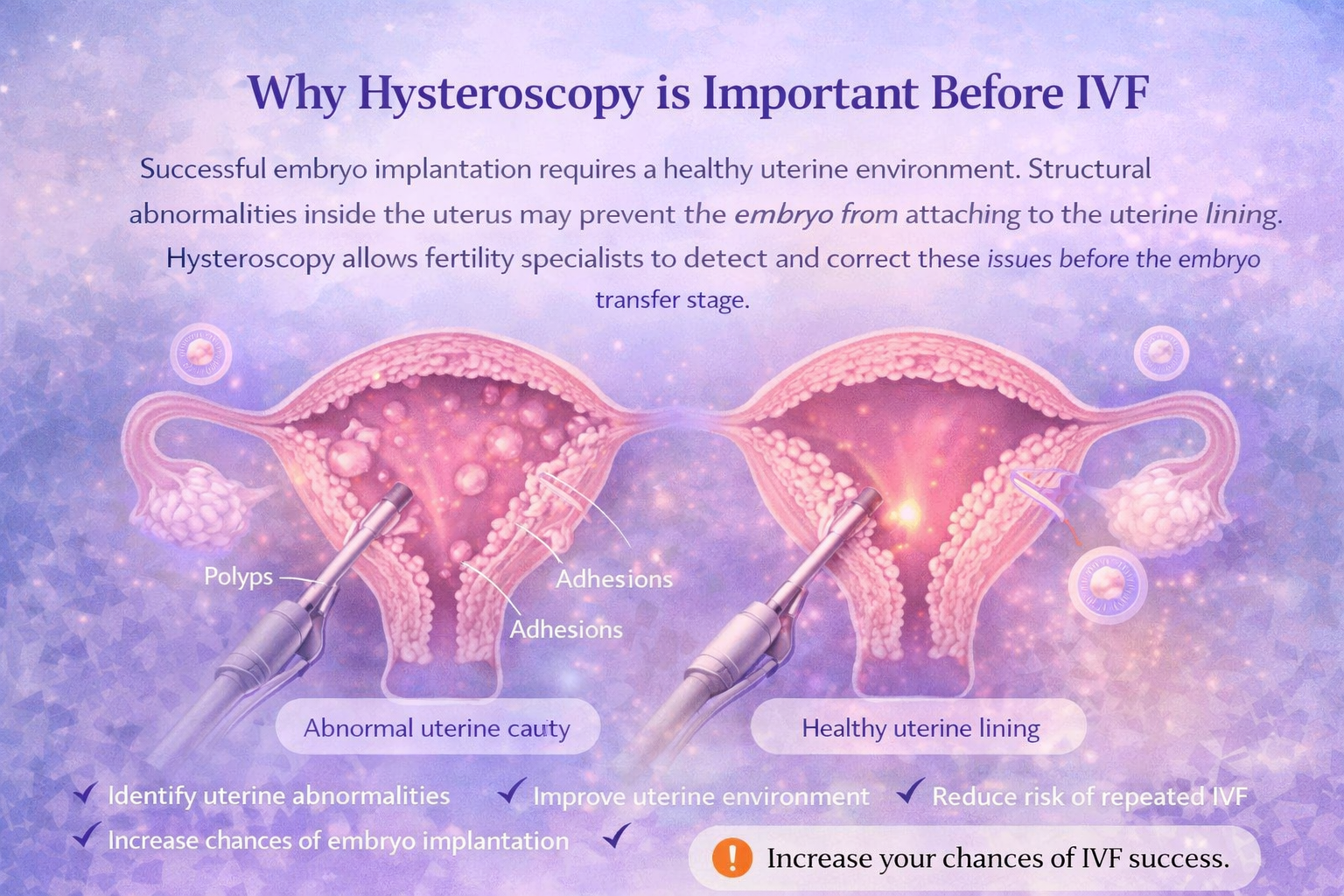
Why Hysteroscopy is Important Before IVF
Successful embryo implantation requires a healthy uterine environment. Structural abnormalities inside the uterus may prevent the embryo from attaching to the uterine lining. Hysteroscopy allows fertility specialists to detect and correct these issues before the embryo transfer stage.
- Identify uterine abnormalities
- Improve uterine environment
- Increase chances of embryo implantation
- Reduce risk of repeated IVF failure
Conditions Detected with Hysteroscopy
- Uterine polyps
- Submucosal fibroids
- Uterine septum
- Scar tissue (Asherman's syndrome)
- Endometrial inflammation
- Chronic endometritis
- Uterine adhesions
- Congenital uterine abnormalities
- Retained tissue from previous procedures
How the Hysteroscopy Procedure Works
Step 1: Preparation
The procedure is usually scheduled...
Step 2: Uterine Examination
The hysteroscope is gently inserted...
Step 3: Treatment
Polyps, fibroids, or adhesions...
Who Should Consider Hysteroscopy?
- Couples with repeated IVF failure
- Women with repeated implantation failure
- History of miscarriage
- Abnormal ultrasound findings
- Unexplained infertility
Benefits of Hysteroscopy
Accurate Diagnosis
Provides a clear view of the uterine cavity.
Immediate Treatment
Chromosomal abnormalities are a major cause of miscarriage.
Improved IVF Outcomes
Treating uterine issues may improve embryo implantation success.
Could Uterine Issues Be Affecting Your IVF?
Our fertility specialists can review your IVF reports and help determine whether hysteroscopy may be useful before your next IVF cycle.
उम्मीद अभी बाकी है
Expert IVF Review
Personalized insights based on your reports