
How Age Affects IVF Success — Explained Simply
Many couples feel confused when IVF doesn’t work… especially when everything else looks fine. One of the biggest factors behind this is age — especially egg quality.
Let’s Understand This in a Simple Way
When it comes to fertility, age is not just a number — it directly affects egg quality.
A woman is born with all the eggs she will ever have. Over time, two things happen:
- The number of eggs reduces
- The quality of eggs declines
This is completely natural — it happens to everyone.
IVF can help with many things… but it cannot fully reverse age-related egg quality decline.
Why Age Makes a Difference in IVF
Age mainly affects three important things in IVF:
.png)
1. Reduced Ovarian Reserve (Fewer Eggs Available)
Ovarian reserve means the number of eggs remaining in the ovaries.
As age increases, this reserve naturally decreases.
This means:
- Fewer eggs during IVF
- Fewer embryos created
- Lower chances of finding a strong embryo
It’s like having fewer chances in each IVF cycle.
2. Higher Chances of Chromosomal Problems
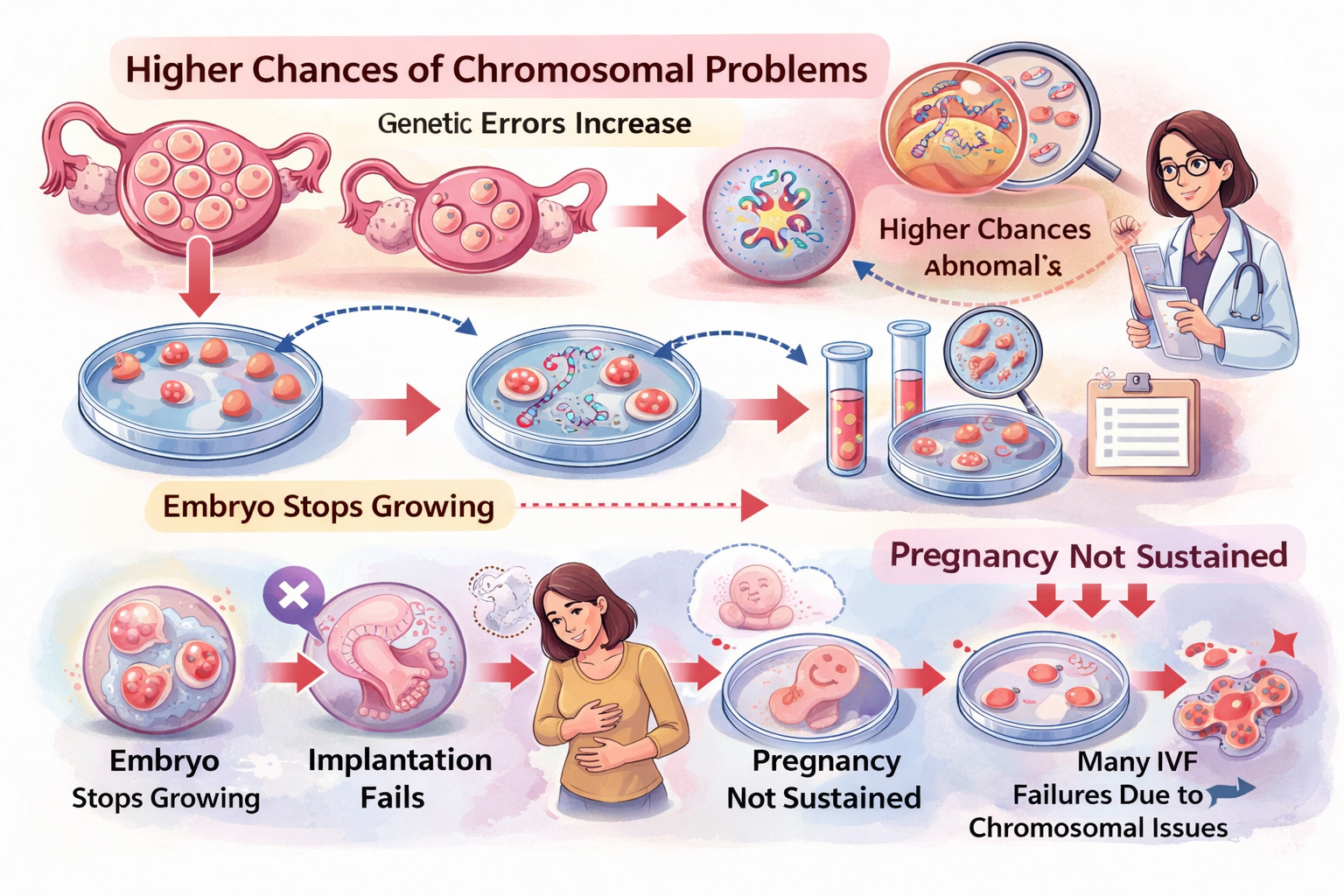
As eggs age, the chances of genetic errors increase.
This can lead to embryos with abnormal chromosomes.
What does this mean in real life?
- Embryos may stop growing
- Implantation may fail
- Pregnancy may not sustain
Many IVF failures are actually due to hidden chromosomal issues in embryos.
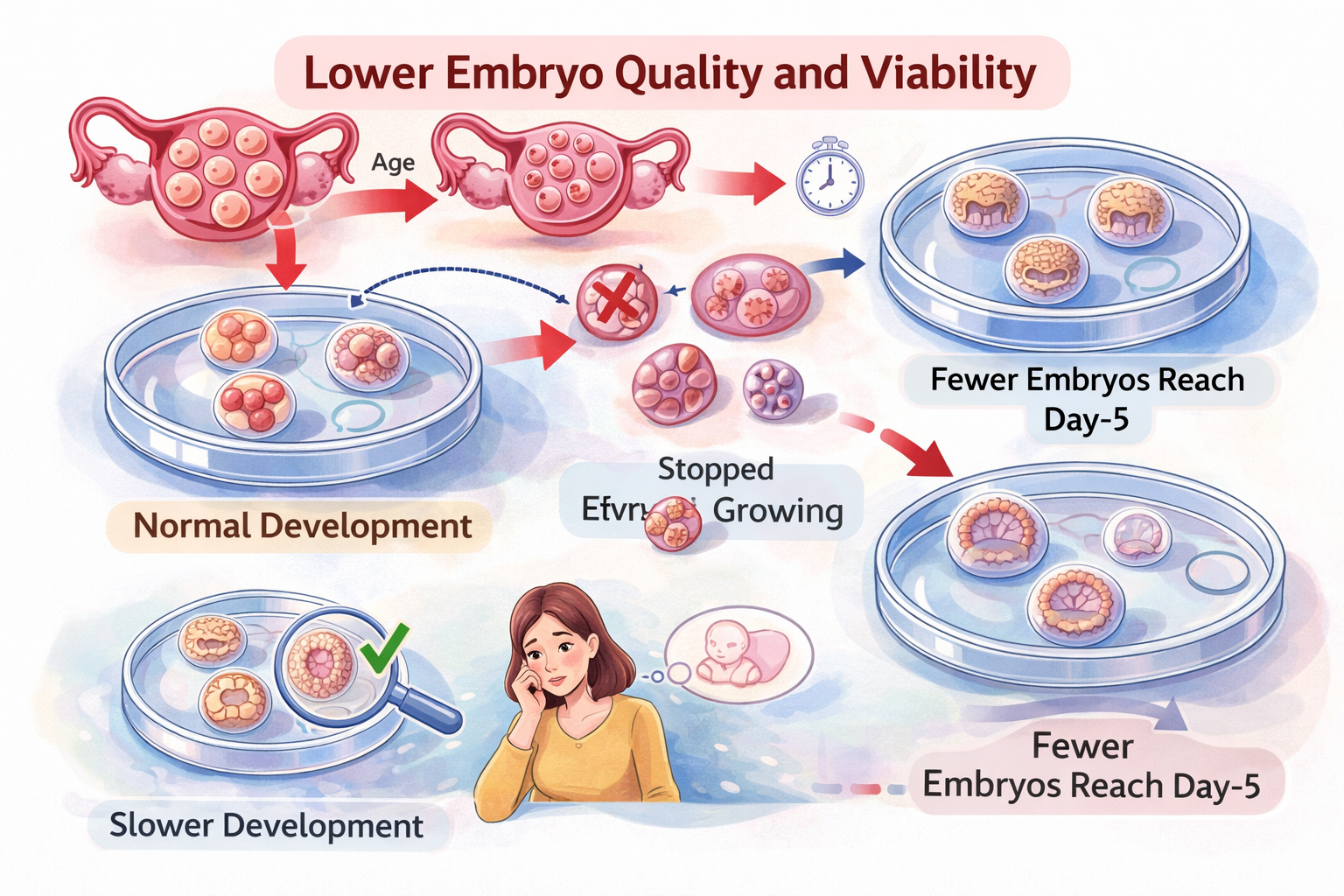
3. Lower Embryo Quality and Viability
Egg quality directly affects embryo quality.
As age increases:
- Embryos may develop slower
- Some embryos may stop growing
- Fewer embryos reach Day-5 (blastocyst stage)
Even if fertilization happens, not all embryos will have the strength to continue development.
A Reality Many Couples Face
Many couples feel confused when:
- Eggs were retrieved successfully
- Fertilization happened
- But pregnancy didn’t happen
In many such cases, the underlying issue is egg quality — not something easily visible in reports.
This is why IVF success rates decline with increasing age.
What Can Be Done About Age-Related Issues?
While age cannot be reversed, there are ways to improve chances.
- Careful IVF planning and protocol selection
- Focusing on embryo quality rather than quantity
- Genetic testing of embryos (in some cases)
- Lifestyle improvements
The most important step is understanding your situation clearly before the next IVF attempt.
Trying IVF But Not Getting Results?
If age-related factors may be affecting your IVF, understanding your case properly can make a big difference.
उम्मीद अभी बाकी है
Expert IVF Review
Personalized insights based on your reports