
Uterine Problems That Can Stop Pregnancy in IVF
Sometimes the embryo is perfectly healthy… but the uterus is not ready. Understanding uterine conditions can explain why IVF fails even when everything else looks normal.
Why the Uterus Matters So Much in IVF
Let’s keep this very simple.
- The embryo is like a seed - The uterus is like soil
Even if the seed is perfect, it won’t grow if the soil is not healthy.
Many couples focus only on embryo quality. But in many IVF failures, the real issue is the environment inside the uterus.
A healthy uterus is just as important as a healthy embryo.
Common Uterine Conditions That Affect Implantation
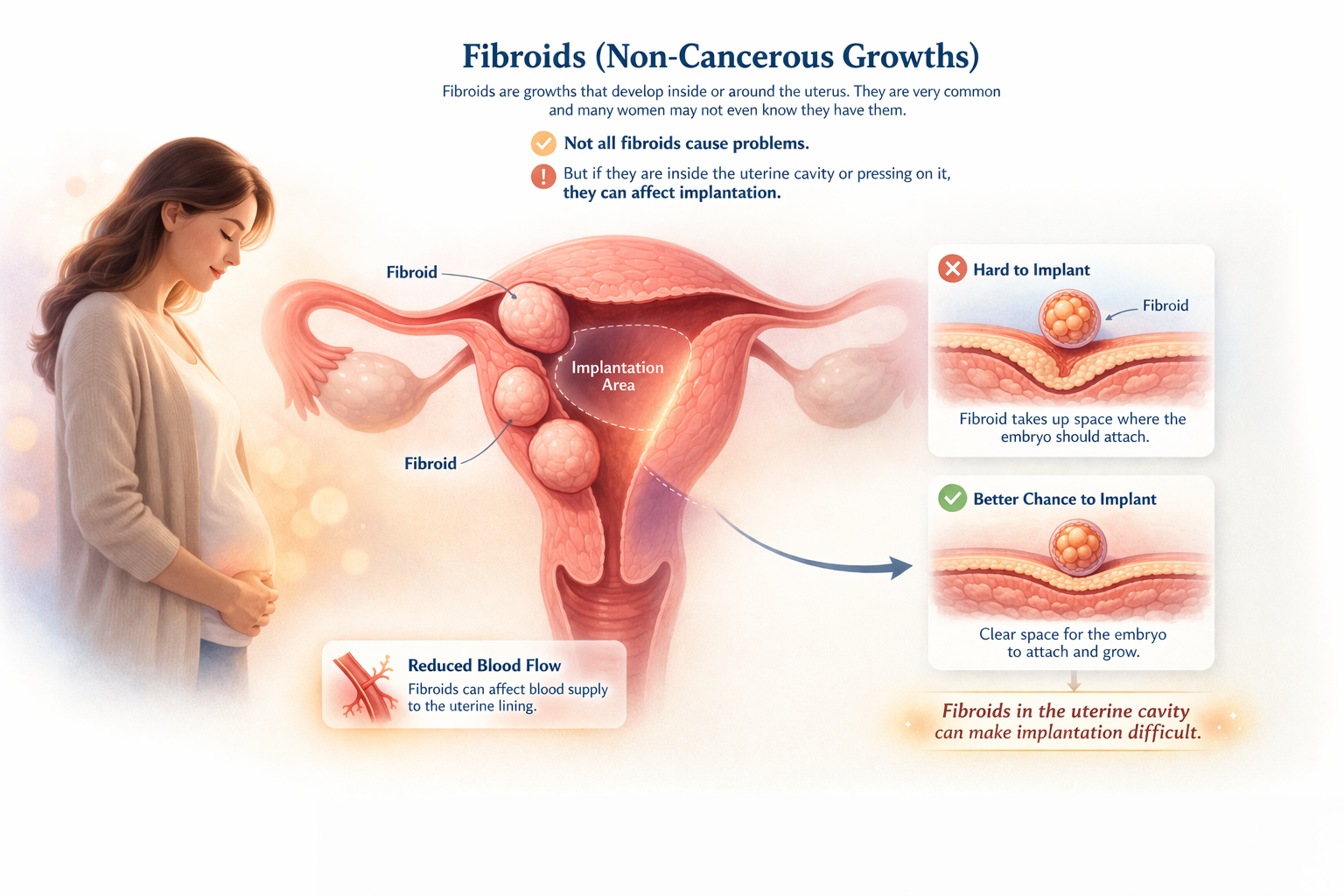
1. Fibroids (Non-Cancerous Growths)
Fibroids are growths that develop inside or around the uterus. They are very common and many women may not even know they have them.
Not all fibroids cause problems. But if they are inside the uterine cavity or pressing on it, they can affect implantation.
Think of it like this:
If something is taking up space where the embryo should attach, implantation becomes difficult.
Fibroids can also affect blood flow to the lining, making the environment less supportive for pregnancy.
2. Uterine Polyps (Small Tissue Growths)
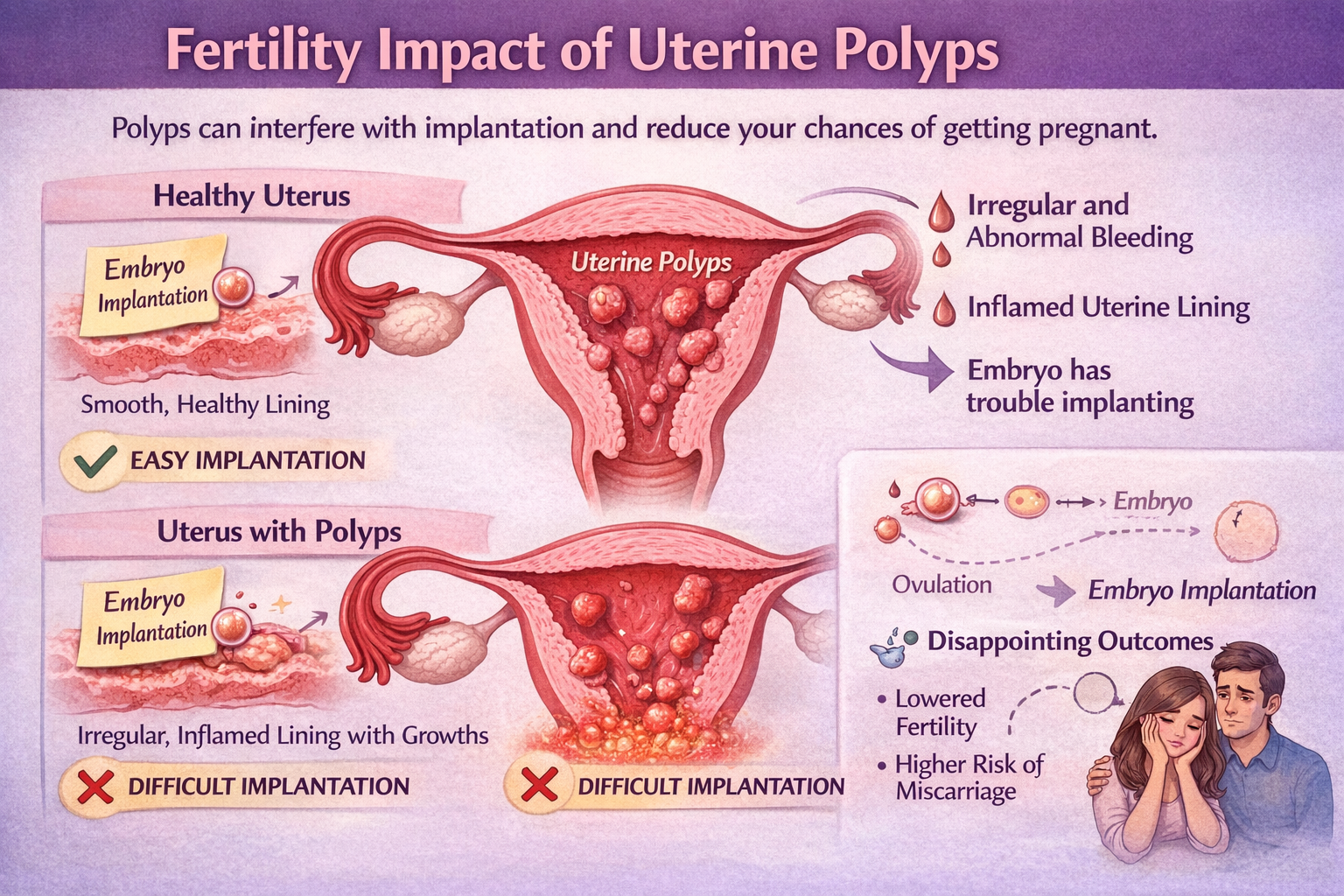
Polyps are small, soft growths inside the uterus.
They may seem harmless, but they can interfere with implantation by disrupting the lining.
Imagine trying to stick something on a surface that is uneven — it won’t attach properly.
Polyps can also cause minor inflammation, which further reduces implantation chances.
3. Adenomyosis (Hidden Uterine Condition)
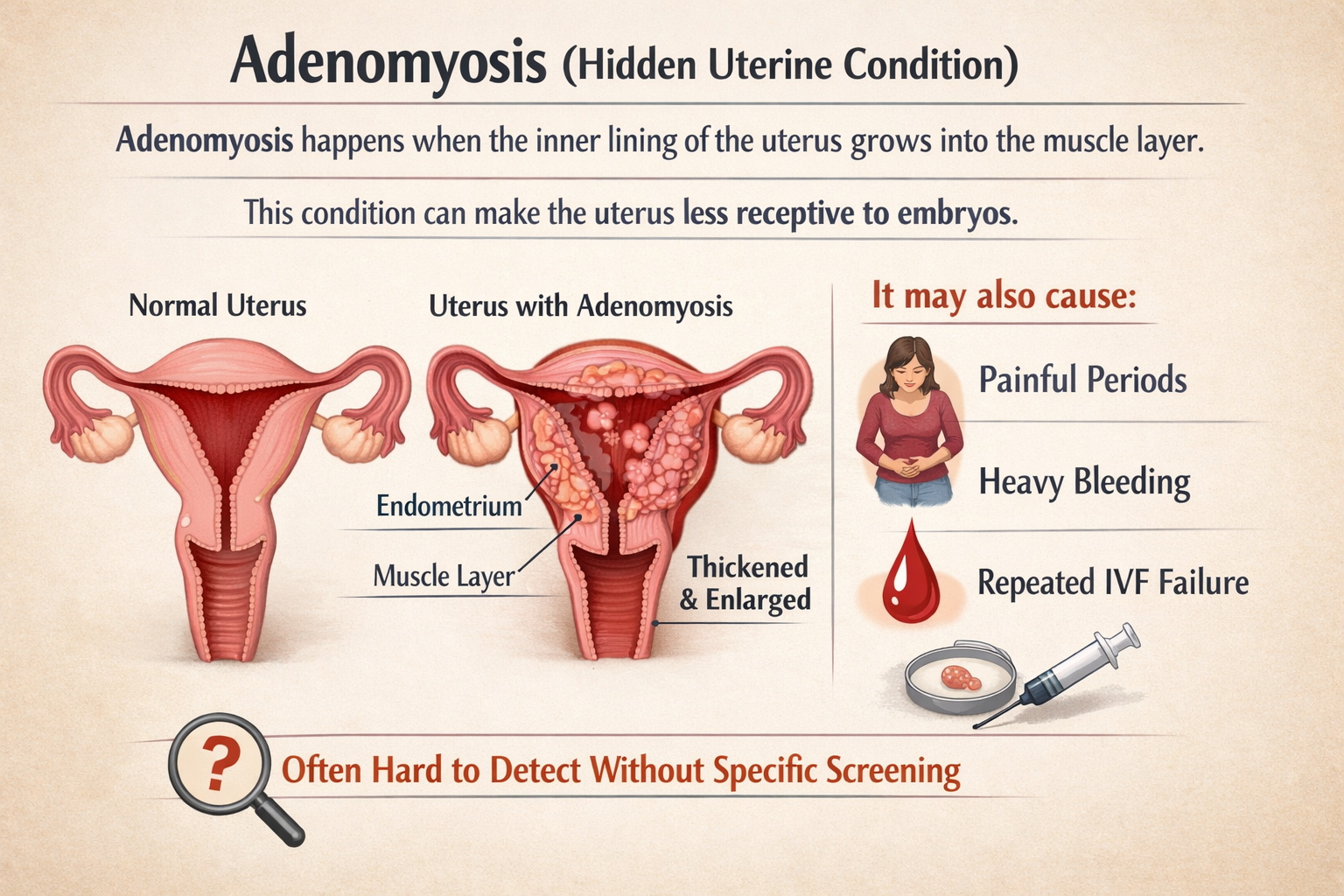
Adenomyosis happens when the inner lining of the uterus grows into the muscle layer.
This condition can make the uterus less receptive to embryos.
It may also cause:
- Painful periods
- Heavy bleeding
- Repeated IVF failure
The difficult part is that adenomyosis is often not easily detected unless specifically checked.
4. Scar Tissue (Damage Inside the Uterus)
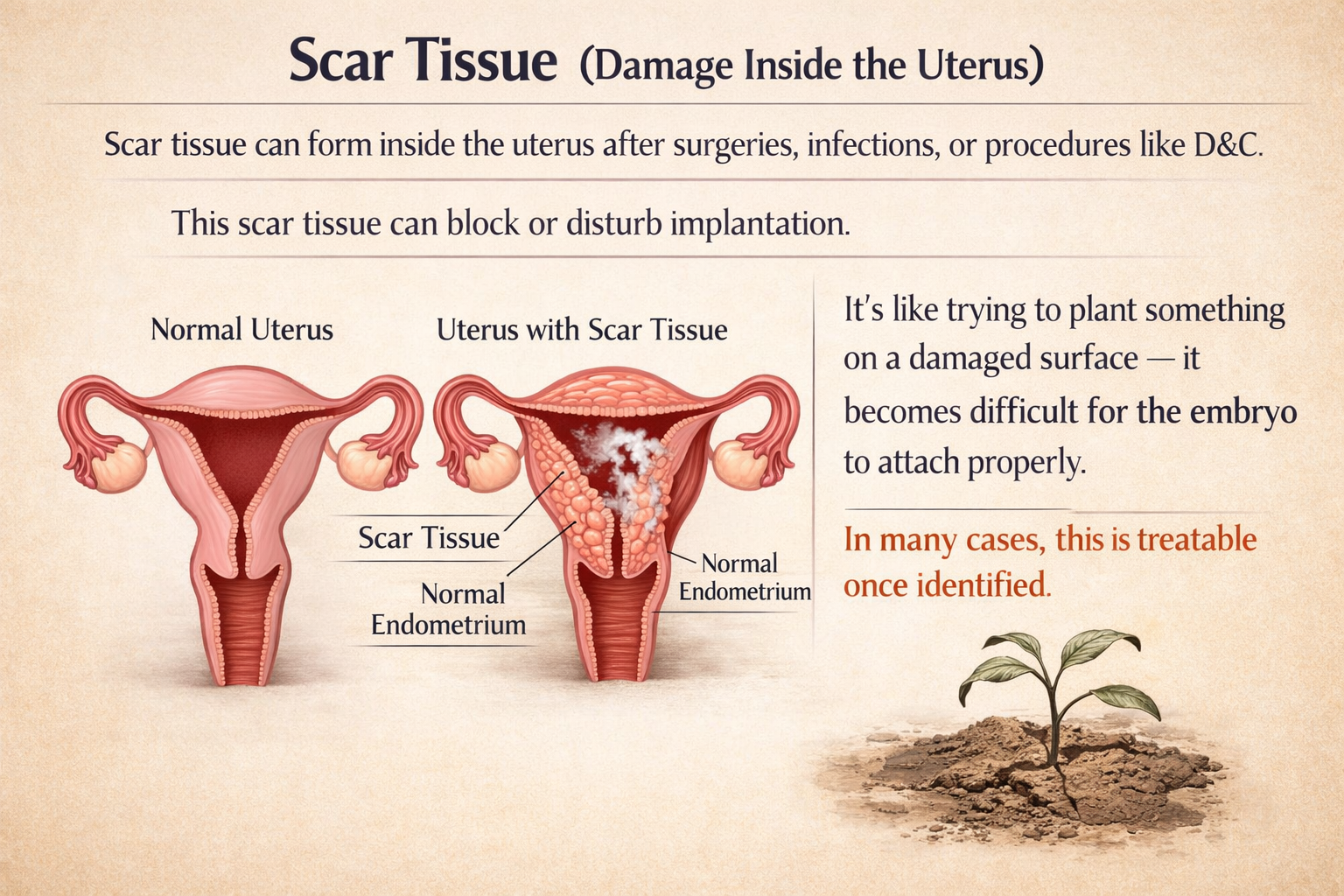
Scar tissue can form inside the uterus after surgeries, infections, or procedures like D&C.
This scar tissue can block or disturb implantation.
It’s like trying to plant something on a damaged surface — it becomes difficult for the embryo to attach properly.
In many cases, this is treatable once identified.
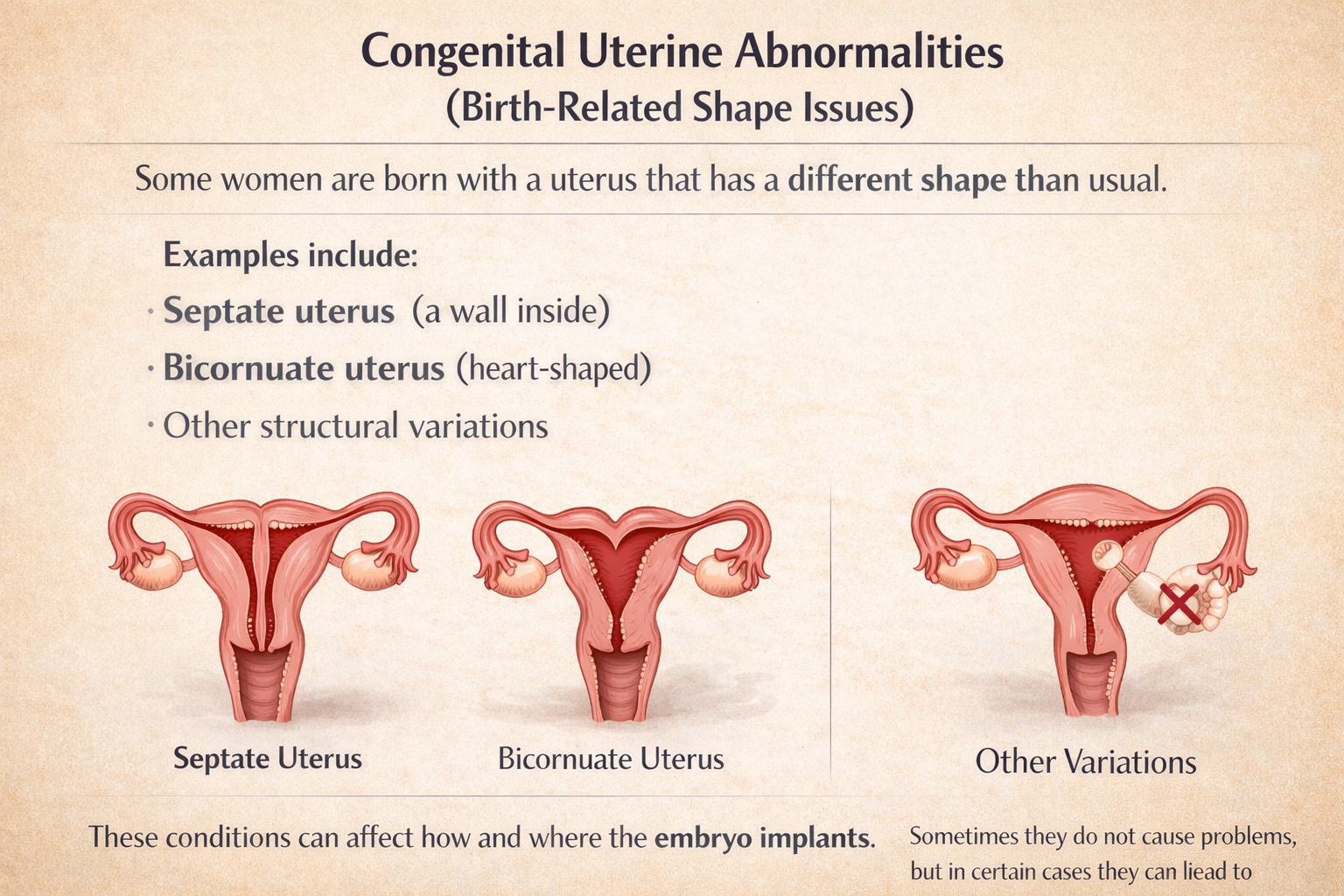
5. Congenital Uterine Abnormalities (Birth-Related Shape Issues)
Some women are born with a uterus that has a different shape than usual.
Examples include:
- Septate uterus (a wall inside)
- Bicornuate uterus (heart-shaped)
- Other structural variations
These conditions can affect how and where the embryo implants.
Sometimes they do not cause problems, but in certain cases they can lead to implantation failure or miscarriage.
Signs a Uterine Issue Might Be Affecting Your IVF
- Good embryos but no pregnancy
- Repeated IVF failure
- Thin lining in reports
- History of uterine surgery
- Heavy or painful periods
If these apply to you, the uterus may be the missing factor.
Can These Problems Be Treated?
Yes — in many cases, uterine problems can be treated or managed.
- Removing fibroids or polyps
- Treating inflammation or infection
- Correcting uterine shape (if needed)
- Improving uterine lining
The most important step is identifying the real cause instead of repeating IVF without understanding what went wrong.
Still Not Getting Pregnant After IVF?
If your embryos are good but pregnancy isn’t happening, the uterus could be the reason.
उम्मीद अभी बाकी है
Expert IVF Review
Personalized insights based on your reports